Thinking about going solar in New York? The first question for homeowners and business leaders alike is, "What's the real cost?" Before diving into incentives and long-term savings, you need a realistic, upfront financial picture. For a typical home in New York, a full solar panel installation cost breakdown usually lands somewhere between $24,000 and $36,000 before any credits or rebates are applied.
This guide will pull back the curtain on every line item, giving you a clear-eyed view of the numbers involved. We'll walk through everything from the hardware bolted to your roof to the local permits required in towns across New York, so you can confidently invest in energy independence, long-term savings, and a greener future for the Empire State.
Your Guide to New York Solar Panel Costs
That initial sticker price can feel steep, but here's the good news: powerful New York State and federal incentives are designed to slash that number dramatically. Whether you're a homeowner in Albany looking to cut household expenses or a business owner on Long Island aiming for a stronger bottom line, getting a firm grip on these costs is the essential first step toward energy independence and substantial long-term savings.
Think of this as your roadmap to understanding what truly drives the total cost of a solar project. We’ll show you how the combination of long-term energy savings and robust financial programs makes going solar one of the smartest investments you can make. While a recent survey puts the national average to install a single solar panel around $1,200, New York's fantastic local incentives can bring your net cost down even further, well beyond the 30% federal tax credit. You can explore more about these national cost averages and see just how well New York stacks up.
To give you a quick snapshot, here’s a look at what you can generally expect to pay in New York for both residential and commercial projects.
Estimated Solar Installation Cost in New York at a Glance
This table provides a quick summary of average cost ranges for residential and commercial solar projects in New York, before and after key incentives.
| System Type | Typical System Size | Average Gross Cost Range | Estimated Cost After Federal & NYS Credits |
|---|---|---|---|
| Residential | 6 kW – 12 kW | $18,000 – $36,000 | $7,000 – $18,000 |
| Commercial | 50 kW – 250 kW | $125,000 – $500,000 | $50,000 – $225,000 |
As you can see, the final cost after taking advantage of available credits makes solar a much more accessible investment for New Yorkers.
What to Expect in This Breakdown
To build that complete financial picture, we need to look at all the pieces of the puzzle that add up to your final investment. Here’s what we’ll cover:
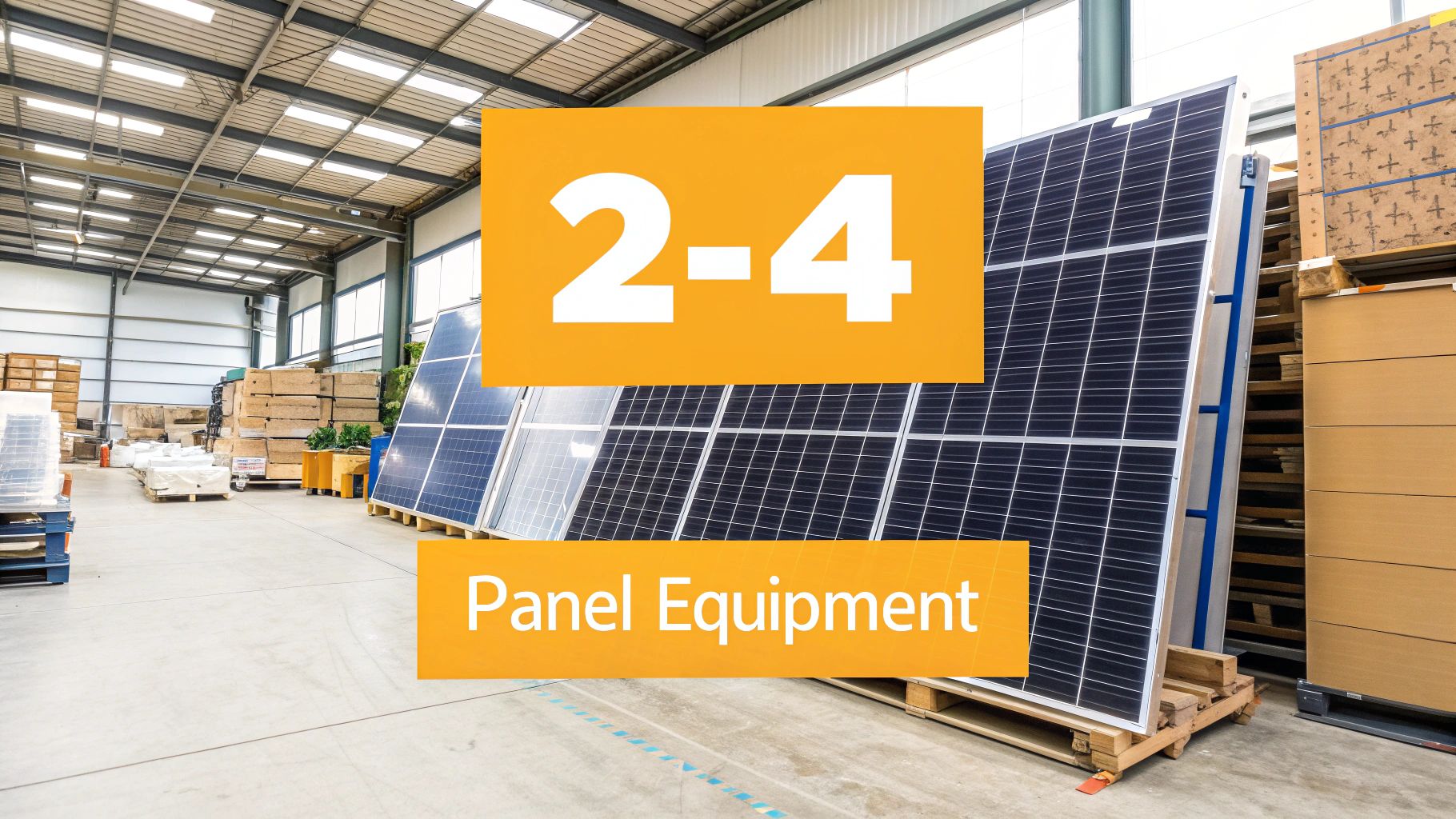
- Equipment Costs: This is the hardware itself—the solar panels, inverters, and the racking system that holds everything securely on your roof.
- Labor and Soft Costs: Beyond the gear, this includes the skilled work of the installation crew, the system design and engineering, and all the permitting fees required for a safe, code-compliant project.
- New York-Specific Incentives: We'll dive into the details of the state and federal tax credits and other programs designed specifically to lower your out-of-pocket expenses.
- Financing Options: We’ll explore how solar loans, leases, and other payment plans can make a solar energy system fit into nearly any budget.
By understanding each component of your solar quote, you can confidently evaluate your options and make an informed decision. The goal is to move past the sticker price and see the true, long-term value of generating your own clean, reliable power.
Consider this your starting point for planning the switch to clean, independent energy. Our team at NY Essential Power is here to help you navigate every step of the process, from an initial free solar consultation to a finished installation that will help you say goodbye to those rising electric bills for good.
Deconstructing Your Solar Equipment Costs
Think of your solar energy system like a high-performance car; it's a lot more than just the sleek body. Your total solar panel installation cost breakdown is made up of several key pieces of hardware, and each one plays a critical role in how well your system performs and how long it lasts. Knowing what these parts are helps you understand exactly where your investment is going.
The solar panels are the most visible part, the engine of your system, turning sunlight into electricity. They usually make up about 25-35% of the total equipment cost. But just like a car needs a transmission to get power to the wheels, your solar system needs an inverter. This crucial device converts the direct current (DC) power from the panels into the alternating current (AC) power your home or business can actually use.
Choosing Your System's Core Components
The type of inverter you select really matters, affecting both the price tag and the system's performance. For instance, a home in Rochester with a roof that gets afternoon shade from a big oak tree would probably do best with microinverters. One of these is installed on each panel, so if one panel is shaded, the others keep pumping out power at full steam. They cost more upfront but maximize your energy production in complex situations.
On the other hand, if you have a simple, wide-open, south-facing roof—common on many Long Island commercial buildings—a single string inverter is often the more traditional, budget-friendly choice where all the panels are wired together.
Of course, you also need a rock-solid foundation. That’s where the racking and mounting system comes in. This hardware fastens the panels securely to your roof and has to be tough enough to handle New York’s wild weather, from heavy snow in Buffalo to gusty winds out on Montauk Point.
The right mix of panels, inverters, and racking is what guarantees your system not only generates the most power possible but also stays put and keeps working for decades. That’s how you get a real return on your investment.
The image below gives you a good idea of how skilled labor is the glue that binds all these high-tech components into a safe, efficient system.
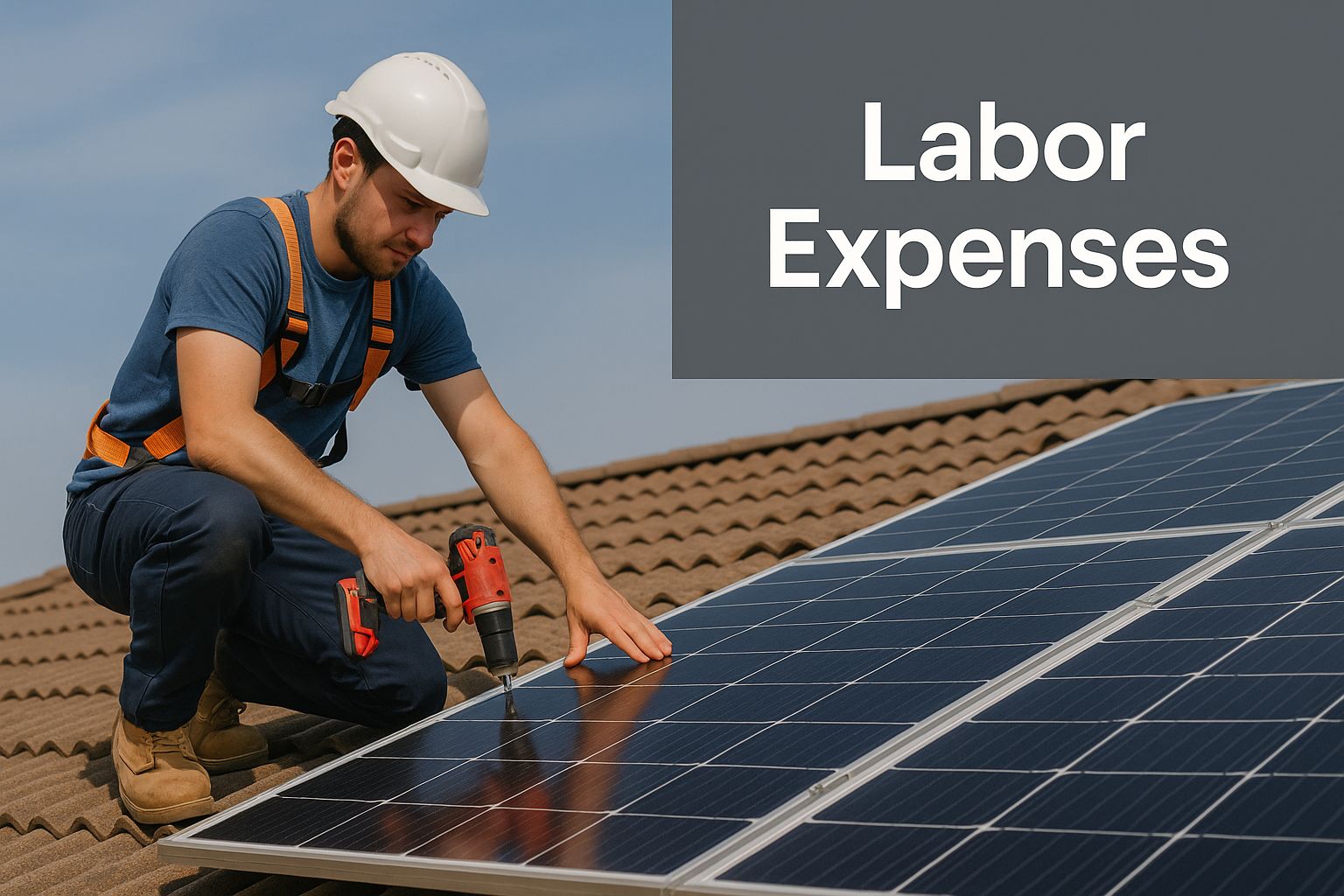
As you can see, turning a pile of quality equipment into a functioning power source for your property requires serious technical skill and precision.
Finally, more and more New Yorkers are adding battery storage, like the Tesla Powerwall, to their setups. This definitely adds to the initial cost, but it gives you something priceless: energy independence. When the grid goes down, your lights stay on, protecting your family or keeping your business operational. Digging into these equipment choices is the first step in designing a system that’s perfect for you. See how our turnkey renewable energy solutions can be built to fit your property’s unique layout and your energy needs.
The Human Element: Labor and Project "Soft" Costs
When you look at a solar quote, you'll quickly realize it's not just about the price of the panels and hardware. A huge part of your solar panel installation cost breakdown is what the industry calls "soft costs." These are the behind-the-scenes, human-powered services that turn a pallet of equipment into a functioning power plant on your roof.
It’s a lot like building a house. You don't just pay for lumber and nails; you’re also paying for the architect's blueprints, the general contractor's expertise, and all the permits required to make sure the structure is safe and legal. Solar works the same way.
The Expertise That Powers Your Project
Soft costs cover all the essential work that ensures your project is designed correctly, installed safely, and approved to operate. Each step requires a specialist with deep local knowledge of New York's specific requirements.
- Engineering and Custom Design: Long before our crew arrives, our engineers are meticulously creating a custom blueprint for your property. They factor in your roof’s specific dimensions, your energy usage, and local weather patterns in places like Suffolk or Nassau County.
- Permitting and Inspection Hurdles: Every town, from the smallest Upstate village to an NYC borough, has its own set of rules. We handle the entire bureaucratic maze of paperwork and approvals, which is a complex but absolutely critical step. You can dive deeper into this process in our guide to navigating solar permits in New York.
- Skilled Installation Labor: This is the hands-on work. It covers the wages for our certified electricians and installation crews who physically mount the panels, run all the wiring, and safely connect your new system to your electrical panel and the utility grid.
These services aren't optional—they're the bedrock of a quality installation. They guarantee your system is built for maximum power production and meets all safety codes, protecting your property and your investment for the next 25+ years.
Why New York's Process Is Unique
You might notice that solar installation costs in the U.S. tend to be higher than in other countries. A big reason for this is our patchwork of regulations that can change from state to state, and even between local utility companies like Con Edison and PSEG Long Island.
This adds a layer of administrative work and complexity. When you also factor in tariffs on some imported parts and the non-negotiable requirement for licensed electricians, you can see how these costs add up.
Understanding where your money goes is key. When you see these labor and soft costs on your NY Essential Power quote, you can be confident that every dollar is an investment in a safe, efficient, and professionally managed project—one that will deliver clean energy and real savings for decades.
Making Sense of New York's Solar Incentives and Tax Credits
That first number you see on a solar quote can feel intimidating, but here’s the secret: it’s not the real price you’ll pay. Not even close. Think of it as the starting line before a series of powerful discounts kick in.
New York is serious about clean energy, and to prove it, the state has rolled out some of the most compelling solar incentives in the entire country. These aren't just small rebates; they're major financial programs designed to slash the cost of going solar for both homes and businesses. Getting a handle on how they work is the key to seeing just how affordable your project can be.
The Big Three Incentives for New Yorkers
For most property owners in New York, the savings boil down to three core programs. They all work a little differently, but you can stack them together to maximize your financial benefit.
-
Federal Solar Investment Tax Credit (ITC): This is the heavyweight champion of solar incentives. It's a federal tax credit that gives you back 30% of your total project cost. There's no dollar limit, which is fantastic for both residential and large-scale commercial projects. You get 30% of the total cost back, dollar-for-dollar, on your federal taxes.
-
NY-Sun Megawatt (MW) Block Program: This is New York's upfront rebate, managed by the New York State Energy Research and Development Authority (NYSERDA). The program provides a cash rebate based on the size of your solar system. Your installer receives this payment directly and simply subtracts it from your bill, so you see the savings immediately. The rebate amount changes by region and is designed to decrease as more people install solar, so acting sooner rather than later often secures a better deal.
-
New York State Solar Energy System Equipment Credit: As if the federal credit wasn't enough, New York adds its own. You can claim another 25% of your system costs (up to a $5,000 maximum) as a credit on your state income taxes. It’s a huge extra boost that many other states don't offer.
When you combine these programs, the financial picture changes dramatically. What starts as a significant expense quickly transforms into a smart, manageable investment that puts you in control of your energy costs and environmental impact for decades to come.
To give you a clearer picture, here’s a quick overview of the key programs available to New Yorkers.
Key Solar Incentives for New York Residents & Businesses
| Incentive Name | Governing Body | Benefit Type | Typical Value/Percentage |
|---|---|---|---|
| Federal Solar Investment Tax Credit (ITC) | Federal (IRS) | Tax Credit | 30% of total project cost |
| NY-Sun Megawatt Block Program | State (NYSERDA) | Upfront Rebate | Varies by region & system size |
| NYS Solar Energy System Equipment Credit | State (NYS) | Tax Credit | 25% of cost, capped at $5,000 |
| NYS Historic Homeownership Rehabilitation Credit | State (NYS) | Tax Credit | 20% for historic properties |
These incentives work in tandem to make solar one of the best property improvement investments you can make in New York.
Putting It All Together: A Real-World Example
Let's stop talking in percentages and look at some real numbers. Imagine you’re putting an 8 kW system on your home in Westchester County, and the gross cost from the installer is $28,000.
Here's how the savings stack up:
- Gross Project Cost: $28,000
- NY-Sun Rebate (an example rate): You’d get an upfront rebate of -$1,600. Your installer handles this, so your initial bill is immediately lowered.
- Adjusted Cost for Tax Credits: $26,400
Now, the tax credits are calculated based on that new, lower amount:
- Federal ITC (30% of $26,400): -$7,920
- NYS Tax Credit (25%, capped at the max): -$5,000
- Total Tax Credits: A whopping -$12,920
When all is said and done, your final, out-of-pocket cost is just $13,480.
That's a total savings of more than 50% off the original sticker price. It completely changes the financial equation. If you want to dive deeper into the latest program details, our guide on 2025 solar incentives and tax credits for New York homeowners has everything you need. As you can see, New York's policies don't just help—they make going solar an incredibly smart financial move.
How Global Supply Chains and Tech Affect Your Price
The price tag on your solar project, whether you're in Syracuse or on Long Island, isn't just a local affair. The final solar panel installation cost breakdown is tied to a massive, always-moving global network of manufacturing, technology, and trade policies. Getting a handle on this bigger picture helps explain why prices fluctuate and highlights how we work to lock in the best possible value for our New York customers.
Think of it like the price of gas. What happens halfway around the world can change what you pay at the pump. It's the same with solar. On one hand, huge international production has made solar panels cheaper than ever. On the other, things like shipping logjams or new trade tariffs can cause temporary bumps in equipment costs.
The Impact of Global Manufacturing Scale
The single biggest reason solar costs have dropped so dramatically is the sheer scale of global manufacturing. As factories around the world churn out more panels, the cost for each one drops for everybody.
By the end of 2024, the world had installed over 2.2 terawatts (TW) of solar capacity, adding a mind-boggling 600 gigawatts (GW) in that year alone. This boom, fueled by international manufacturing, has led to a surplus of solar modules, which helps keep prices competitive for projects right here in New York. For a deep dive into the numbers, you can read the full analysis on global PV markets and see the data for yourself.
Technological Leaps and Your Bottom Line
It’s not just about making more panels; it's about making better ones. Thanks to constant innovation in photovoltaic (PV) technology, the panels we install today are light-years ahead of what was available just five years ago in terms of efficiency.
Higher efficiency is a game-changer. It means you need fewer panels to produce the same amount of power, which can lower both the hardware and installation costs for your home or business.
At NY Essential Power, we keep a close eye on these global currents. By tracking supply chains and sourcing the latest, most efficient tech, we make sure you’re not just getting a good price. You’re getting a system built with the best components the world has to offer, giving you maximum value, reliable long-term performance, and a quicker return on your investment.
Choosing the Right Solar Financing Option
Don't let the sticker shock of a new solar system stop you from going solar. A high upfront cost is no longer the barrier it once was. These days, there are several financing paths that make solar accessible for almost any budget, turning a big investment into a manageable monthly payment.
Figuring out these options is a crucial part of understanding any solar panel installation cost breakdown. It’s a lot like buying a car—you can pay in cash, finance it with a loan to own it over time, or lease it for a set number of years. Solar works the same way, and each path has its own pros and cons depending on your financial goals.
Comparing Your Financial Paths
Most property owners pay for their solar system in one of three ways: a solar loan, a solar lease, or a Power Purchase Agreement (PPA). Let's break down how each one works.
- Solar Loans: This is the most popular way to go if you want to own your system. You simply take out a loan to cover the purchase and pay it back over time. The biggest advantage here is that you own the panels, which means you get to pocket all the valuable tax credits and incentives. That directly slashes your total cost.
- Solar Leases: With a lease, you don’t actually own the equipment. Instead, a solar company installs the panels on your roof, and you pay them a fixed monthly fee to use them. This option often comes with a $0 down payment, but the trade-off is that the solar company gets the tax credits, not you.
- Power Purchase Agreements (PPAs): A PPA feels a lot like a lease, but with a slight twist. Instead of paying a flat fee to rent the equipment, you agree to buy the power it produces at a set price. This rate is usually a good bit lower than what your utility company charges.
So which one is best? If your goal is to maximize your long-term savings and build equity, a solar loan is the hands-down winner. But if you’re focused on lowering your electric bill right now with zero money down, a lease or PPA might be the perfect fit.
For many homeowners, we find that a well-structured solar loan payment ends up being less than their current utility bill, meaning they start saving money from day one.
To dive deeper into the specifics, take a look at our complete guide on the top solar financing options for Long Island homeowners. We're here to walk you through all the details and find the right path to make your solar project happen.
Got Questions About New York Solar Costs? We’ve Got Answers.
Even after seeing all the numbers, it's natural to have a few more questions pop up. It’s a big decision, after all. Let's tackle some of the most common things we hear from New Yorkers who are thinking about making the switch to solar.
How Long Until My Solar Panels Pay for Themselves?
This is the big one, right? For most property owners in New York, the solar payback period typically lands somewhere between 8 and 12 years.
What pushes that number to one end of the range or the other? It really comes down to three things: your final system cost after incentives, how much electricity you use, and what your local utility (like Con Edison or PSEG Long Island) charges per kilowatt-hour.
Once you’ve hit that breakeven point, every bit of energy your panels produce is pure savings. Considering your system has a 25+ year lifespan, that’s a lot of years of free, clean electricity and a powerful hedge against rising utility rates.
Does Adding a Battery Drive Up the Cost?
Yes, adding a home battery system like a Tesla Powerwall will increase your upfront investment, usually by $10,000 to $20,000. But for many homeowners and businesses, the peace of mind and operational continuity are worth every penny.
Think about it—having a battery means you have your own personal power source during blackouts. Anyone who's been through a major storm on Long Island or a winter outage upstate knows how valuable that kind of energy independence can be for protecting your family or keeping a business running.
The good news? Batteries often qualify for their own incentives through programs like NY-Sun, which can take a serious bite out of that initial cost.
Are There Any Hidden or Long-Term Costs I Should Worry About?
With a reputable installer, there shouldn't be any surprises. Your quote should be straightforward and cover everything. That said, it's always smart to think about the long haul.
The long-term costs are usually minimal, but here’s what you might encounter down the road:
- Inverter Replacement: If you have a standard string inverter, you might need to replace it once, around the 10-15 year mark.
- Rare Maintenance: Modern solar panels are incredibly durable, but it's possible you could need a service call at some point.
This is where quality really matters. Top-tier solar panels and microinverters come with solid 25-year warranties, giving you a strong safety net and keeping those long-term financial worries to a minimum.
Ready to take control of your energy future and see how these numbers stack up for your property? The team at NY Essential Power can build you a free, no-pressure quote that details every cost and every potential saving. Get your personalized solar estimate today!