Picture this: your New York home or business has its own private energy reserve, ready to go whenever you need it. That's the powerful idea behind residential solar battery storage. It’s a smart system that puts you in the driver's seat, giving you full control over the clean energy your solar panels generate. This is what true energy independence from often-unpredictable utility companies like Con Edison and PSEG Long Island looks like.
What Is Solar Battery Storage and Why Does It Matter in New York?
Think of a solar battery as a savings account, but instead of money, you're saving electricity. On those bright, sunny New York days—especially out on Long Island where the sun really shines—your panels are often making more power than you can use in the moment. Without a battery, all that extra energy gets sent back to the grid for a small credit.
A solar battery changes the game by capturing and storing that excess power for you.
This stored energy becomes your personal power supply. You can use it at night, on cloudy days, or—most critically—when the power goes out. For any New Yorker who's dealt with grid failures during a summer heatwave or a nasty winter storm, this is huge. It's not like a noisy backup generator; it's a silent, automatic system that keeps your essentials running without skipping a beat.
Here's a quick breakdown to put it all in perspective.
Solar Battery Storage At a Glance
| Core Function | Primary Benefit for New Yorkers |
|---|---|
| Captures & stores excess solar energy | Provides seamless backup power during outages |
| Discharges stored energy on demand | Reduces reliance on expensive peak-hour grid electricity |
| Integrates with your solar panel system | Increases energy independence and control |
Essentially, a solar battery ensures you get to use every last drop of the clean energy you produce, right when you need it most.
Transforming Your Property into an Energy Hub
Adding a solar battery turns your home from just another energy consumer into its own self-reliant energy hub. This shift brings some major advantages for homeowners and businesses everywhere, from Suffolk County to Westchester.
- Energy Security: When the neighborhood goes dark, your lights, refrigerator, and Wi-Fi stay on. No more interruptions. For a business, this means your critical systems—computers, security, and communications—remain operational.
- Cost Control: You can tap into your stored solar energy during the evening when utility rates are at their peak, which directly slashes your monthly electric bill.
- Environmental Impact: By using more of your own clean power, you cut down on your reliance on fossil fuels and do your part to help New York meet its ambitious clean energy goals.
Of course, a battery works best when your whole system is running at its peak. To get the most out of your storage, you need to make sure you're generating as much solar power as possible. Checking out a guide on maintaining your solar panels for peak performance is a great step to ensure you're capturing every available ray of sun.
Ultimately, adding a battery is the final piece of the puzzle for taking complete control over your property's power.
Ready to take control of your energy? Contact NY Essential Power for a free, no-obligation quote and see how a solar battery can benefit your home or business.
What’s in It for New York Property Owners?
From Long Island to the Hudson Valley, adding a residential solar battery storage system to your property is a game-changer. It’s about more than just having solar panels on the roof; it gives you a whole new level of control, security, and financial smarts when it comes to your power. The real value boils down to three key areas that make a tangible difference in your daily life and operations.
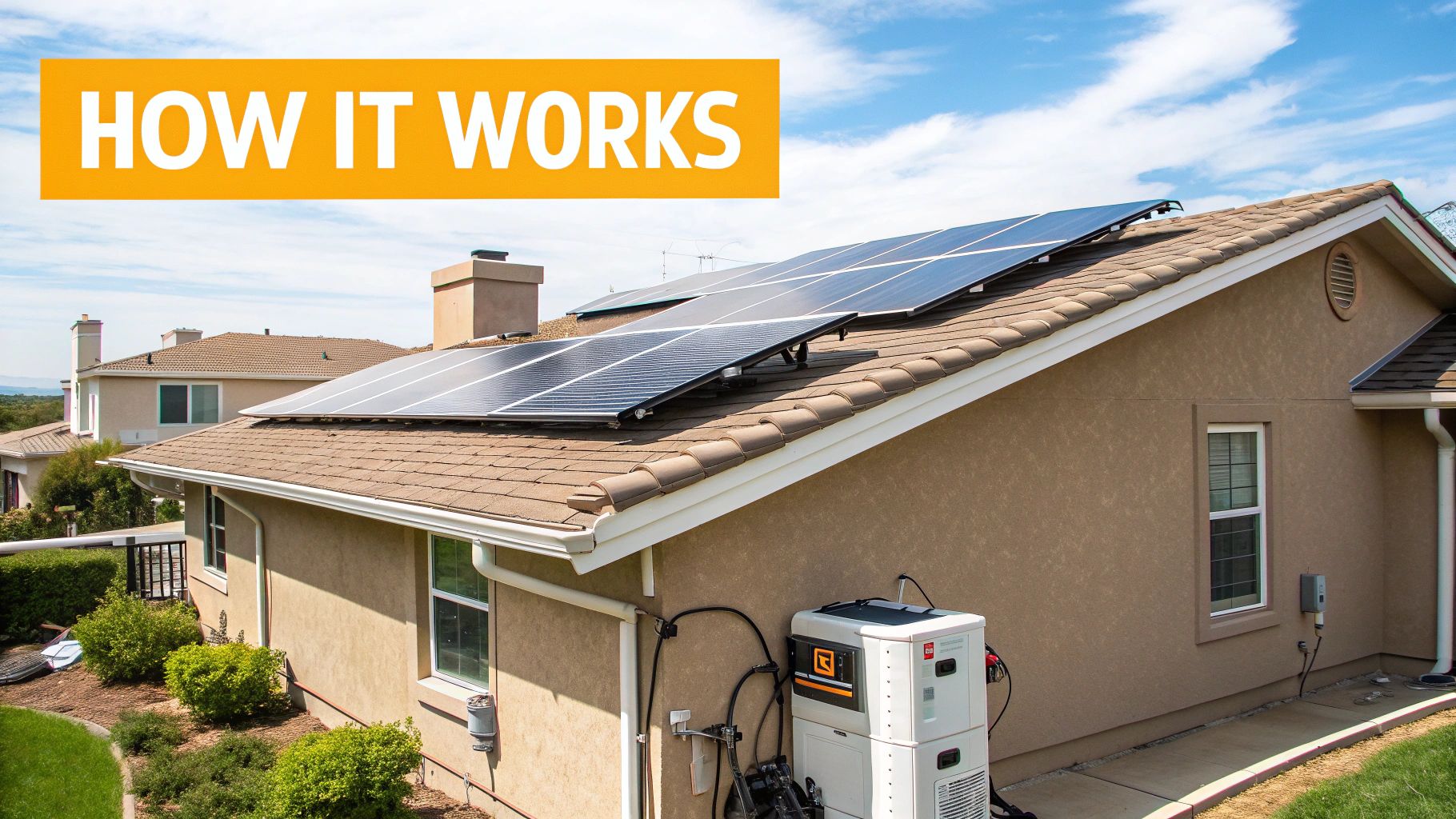
This move toward energy independence isn't just a local trend. The residential battery market hit roughly $5.13 billion in 2024, and it’s being fueled by a desire for self-reliance. As our grid shows its age and extreme weather becomes the new normal, property owners want to be able to store their own solar power and use it when they need it most. You can explore the full market analysis on residential energy storage to see just how big this movement has become.
Unshakeable Energy Security
When a nasty storm rolls through New York, the power grid is often the first casualty. A solar battery is your personal backup plan, keeping your home or business running smoothly through any outage.
Think about the last time a powerful nor'easter or summer thunderstorm left your neighborhood in the dark. With a battery, while everyone else is scrambling for flashlights, your lights stay on. Your refrigerator keeps running, and your Wi-Fi doesn't miss a beat. This is more than just a convenience—it's a lifeline. It keeps essential medical devices powered, prevents hundreds of dollars of food from spoiling, and ensures you stay connected.
Your property essentially becomes a self-powered island, completely untethered from the local utility's problems. That kind of peace of mind is priceless for any New York family or business owner.
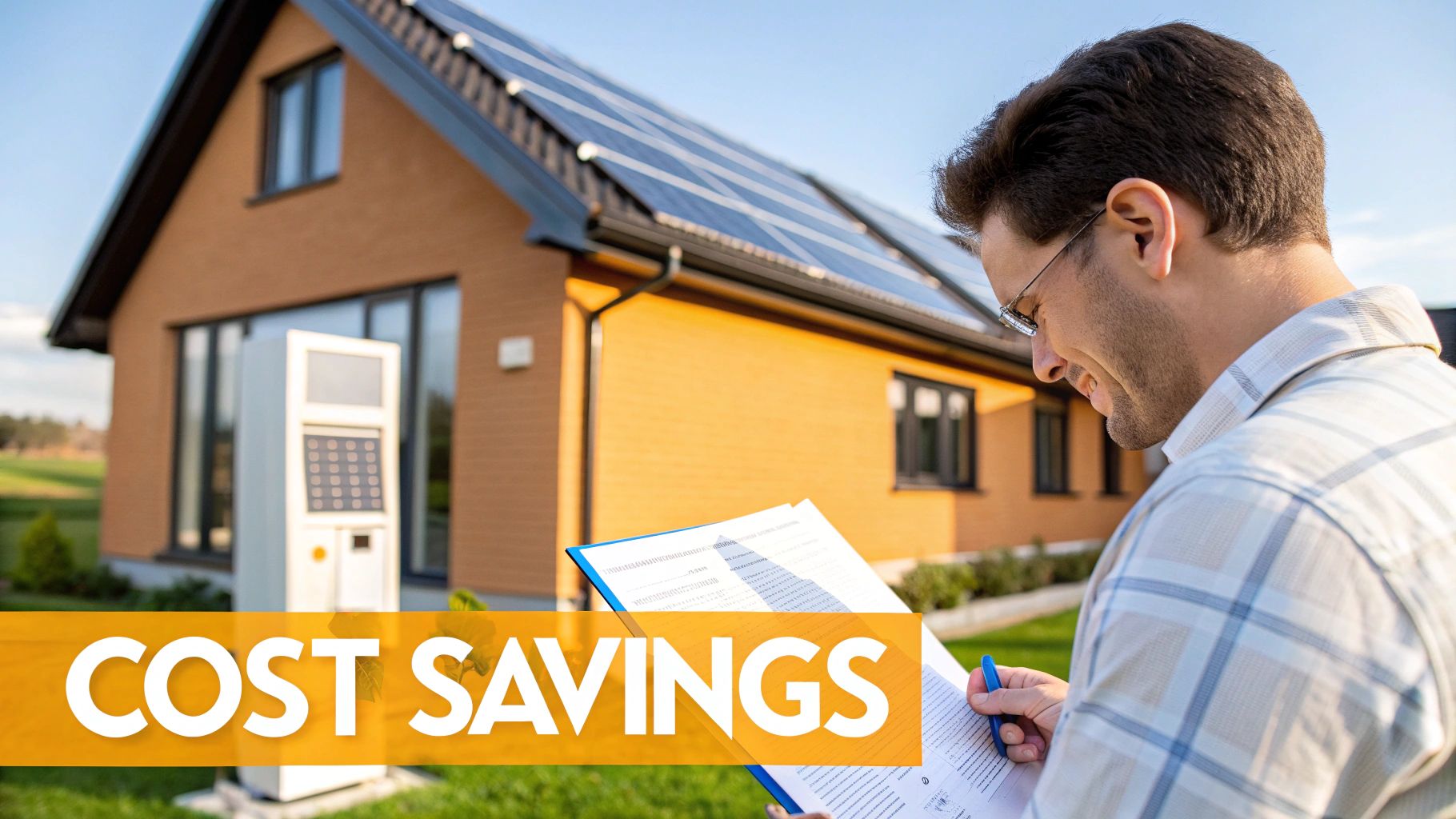
Smarter Cost Savings
Beyond backup power, a solar battery is also a powerful financial tool that actively cuts down your monthly utility bills. It's designed to make sure you squeeze every drop of value out of the clean energy you generate.
Here's how it works: during the day, your battery stores any extra solar power your home isn't using. Later in the evening, when electricity rates from the utility often shoot up, your system can automatically switch over to that stored, free energy instead of pulling expensive power from the grid. This strategy, sometimes called time-of-use optimization, directly slashes your bills and boosts the return on your solar investment.
- Dodge Peak Rates: You can use your own stored solar power when grid electricity is most expensive.
- Maximize Self-Consumption: You get to use 100% of the energy you produce, rather than sending it back to the utility for a minimal credit.
- Get Financial Predictability: Your energy costs become far more stable and less vulnerable to surprise rate hikes from the utility company.
A Real Environmental Impact
By installing a battery, you’re doing more than just saving money—you're taking a meaningful step toward a cleaner, more sustainable lifestyle. It’s a direct way to reduce your property's dependence on the fossil fuel power plants that still dominate the grid.
Every kilowatt-hour of stored solar energy you use is one less that has to be generated by burning coal or gas. This shrinks your carbon footprint and helps push New York toward its ambitious clean energy goals. You become part of the solution, helping build a more resilient and environmentally sound energy system for the whole state. Our guide to 2025 solar incentives for New York homeowners explains how the state is rewarding property owners for making this switch.
How a Solar Battery Works with Your System
So, how does this whole system actually work? Let's pull back the curtain. The beauty of it is that the entire process is automated, quietly working in the background to give you more control over your power. It all starts, of course, with the sun hitting your solar panels.
The electricity your panels generate is something called direct current, or DC power. If you want a deeper dive into the panels themselves, this guide to solar panels on your roof is a great place to start. From the panels, that DC power travels to a solar inverter, which is essentially the brains of your entire operation.
The inverter's main job is to convert that raw DC power into alternating current (AC) electricity. That’s the standard electricity that powers everything in your house or commercial space, from the coffee maker to the computers. Your building's needs always come first, so any appliances running will immediately use the solar power being generated.
The Energy Flow Process
But what happens on a bright, sunny afternoon when your panels are cranking out more power than your home is using? This is where your residential solar battery storage system shines.
Instead of just sending all that extra energy back to the Con Edison or PSEG grid for a small credit, the inverter smartly reroutes it to your battery, charging it up for later. This simple step ensures that not a single watt of clean, self-generated energy goes to waste.
This infographic breaks down that simple, effective flow of energy from the sun to your home.
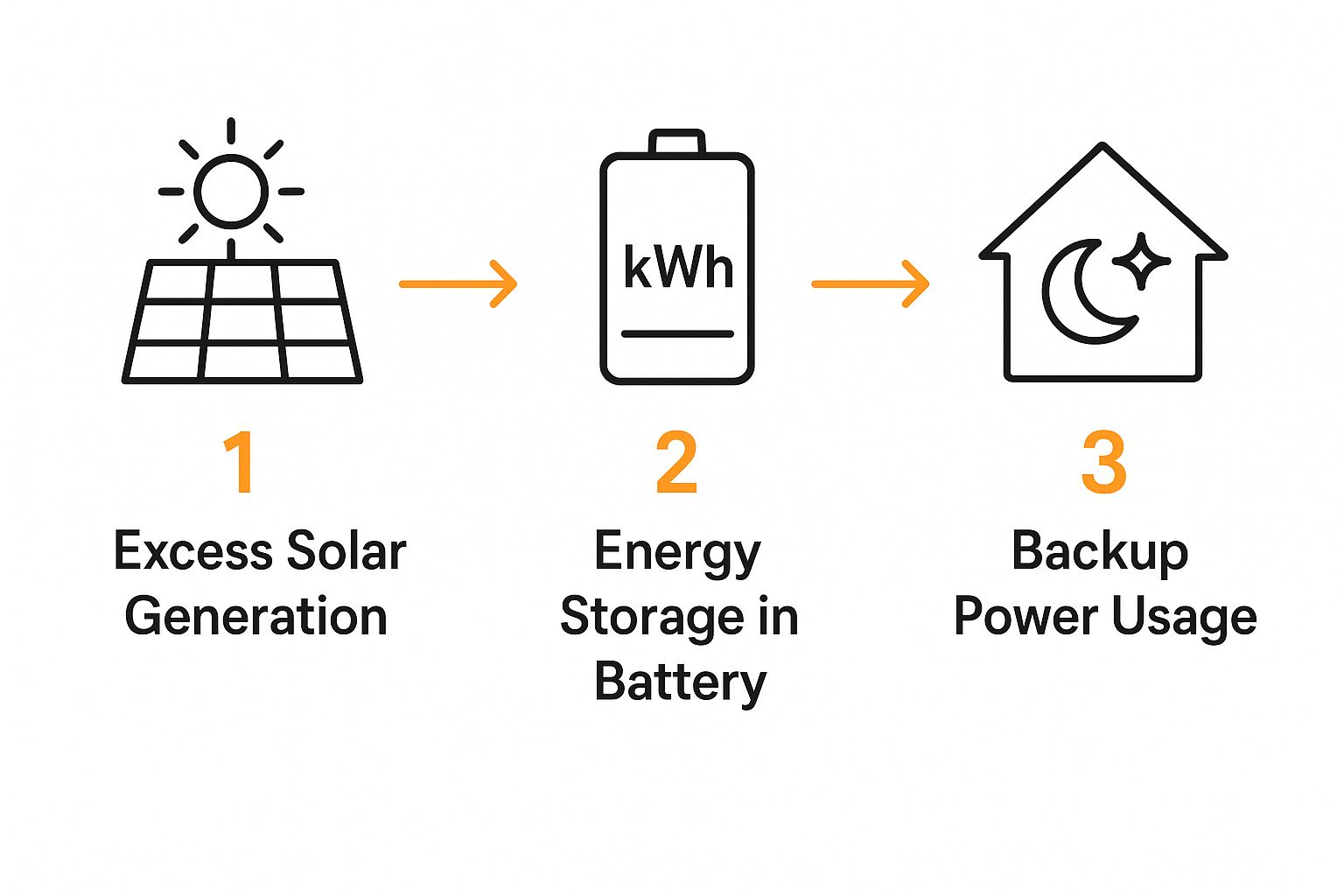
As you can see, the system is designed to let you use your own power first, storing anything extra for when you’ll need it most.
Using Your Stored Energy
Fast forward to the evening. The sun has set, the panels are no longer producing, but you still need to power your property. Or maybe a classic New York storm rolls through and knocks out the grid.
In either scenario, the inverter automatically and instantly switches over, drawing the energy it stored in your battery earlier in the day.
You honestly won't even notice it happen. The lights won't flicker, the Wi-Fi stays on, and life goes on without a hitch. This is the real-world peace of mind a battery provides. To get a better handle on the science behind this, check out our article on how solar panels work.
The system is designed for total automation. It intelligently manages the flow of energy between your panels, home, battery, and the grid, always optimizing for your benefit.
Today’s top systems, like the Tesla Powerwall, almost exclusively use Lithium-Ion battery technology—the very same tech that powers electric cars and our smartphones. It’s become the industry standard for a reason: it's incredibly efficient, safe, and built to last for years. Together, these pieces create a robust, self-reliant energy ecosystem right in your own building.
Choosing the Right Battery Size for Your Needs
Picking the right size for your residential solar battery storage system is probably the most important decision you'll make in this whole process. It's definitely not a one-size-fits-all deal. The perfect capacity, which we measure in kilowatt-hours (kWh), comes down to your family's energy habits and what you want to accomplish.
Think of it like choosing a water heater. You need one big enough to handle your family's morning showers, but getting a giant commercial one would be a waste of money and space. Sizing your battery is all about finding that same sweet spot.
The right size really depends on three things: how much electricity you use each day, the size of your solar panel system, and what you absolutely need to keep running during a power outage. A well-sized battery gives you reliable power when the grid is down and makes sure you're getting the most out of your investment.
Defining Your Backup Power Goals
First things first, you need to decide what you want your battery to do when the lights go out. Are you just trying to keep the essentials running, or are you looking for seamless, whole-home power?
- Critical Load Backup: This is the most common approach. It focuses on powering only your most important circuits—things like the refrigerator, a few lights, your Wi-Fi router, and maybe a sump pump or crucial medical device. A smaller, more affordable battery can easily handle these necessities.
- Whole-Home Backup: If you don't want to notice the grid is down, this is for you. A larger battery system (or multiple batteries stacked together) can power pretty much everything, including big-ticket items like central air conditioning, an electric stove, or your EV charger. It offers complete comfort and peace of mind.
For example, a typical family in Suffolk County might just want to keep the fridge cold, the lights on, and the heat running in the winter. A mid-sized battery is perfect for that. But someone with a large home in Westchester, two AC units, and an electric car will likely want a much beefier system to keep their lifestyle uninterrupted. It all starts with your priorities.
Finding the Sweet Spot for Your Home
For years, the standard home battery hovered around 10 kWh. That size is still incredibly popular because it hits a great price point and covers the essentials for an average-sized home.
But things are changing. The fastest-growing category of home batteries is now in the 20–29 kWh range. These larger systems are built for bigger homes or even small businesses that can't afford any downtime. If you're curious, you can learn more about solar battery market trends and see how homeowner needs are evolving.
To make this a bit more concrete, here’s a simple breakdown of what different battery sizes can typically handle for a home in New York.
Estimating Your Battery Needs
| Battery Size (kWh) | Best For | Example Appliances Covered During Outage |
|---|---|---|
| 10 – 13.5 kWh | Essential Backup & smaller homes | Refrigerator, lights, Wi-Fi router, TV, sump pump, phone chargers |
| 14 – 19 kWh | Enhanced Backup & average-sized homes | All of the above, plus a furnace/boiler, well pump, or a small AC window unit |
| 20+ kWh | Whole-Home Backup & larger energy needs | Everything in the home, including central air conditioning and EV chargers |
This table is just a starting point, of course. Your actual needs will depend on the specific appliances you have and how you use them.
The right battery isn't the biggest one—it's the one perfectly matched to your energy profile. An oversized battery means paying for storage you don't need, while an undersized one will leave you in the dark when you need power most.
Our team at NY Essential Power specializes in looking at your past energy bills and talking through your goals to design a system that’s just right. We'll help you find that perfect balance so your investment delivers reliable power and maximum savings for years to come.
Navigating New York Solar and Battery Incentives
Let's be honest—the upfront cost of a residential solar battery storage system is a major consideration. The good news is that New York has some of the best financial incentives in the country, designed to slash that initial price tag and make energy independence a smart financial decision right from the start.
Let’s dive into the key programs that can save you thousands.
It all starts at the federal level with the Residential Clean Energy Credit. You've probably heard it called the Solar Investment Tax Credit (ITC), and it's a game-changer. This isn't just a small deduction; it's a powerful tax credit that chops 30% off the total cost of your solar and battery system right off your federal tax bill. That includes both the hardware and the installation labor.
State-Level Rebates and Programs
On top of that huge federal credit, New York rolls out its own impressive incentives. This is where living in a state committed to clean energy really pays off.
The main player here is the New York State Energy Research and Development Authority (NYSERDA). They’re the ones behind the programs that make clean energy tech, like solar batteries, so much more accessible for property owners.
- NY-Sun Initiative: Think of this as the foundation. It’s an upfront rebate that lowers the cost of your solar panels, which in turn makes the whole solar-plus-storage package more affordable.
- NYSERDA Energy Storage Incentive: This is the big one for batteries. It's a direct, upfront rebate specifically for adding energy storage. The amount is based on the kilowatt-hour (kWh) size of your battery, directly reducing what you pay out of pocket. The incentives are especially generous for homeowners on Long Island.
The best part? You can stack these incentives. The federal tax credit and state rebates combine to dramatically lower the net cost of your system. Our team at NY Essential Power is obsessed with this stuff—we handle all the paperwork to make sure you get every single dollar you're entitled to.
Why Incentives Matter
These financial programs are a huge reason why so many homeowners are making the switch. When you combine the frustration of rising utility bills with the desire for reliable backup power, these rebates and tax credits often become the deciding factor that makes a home battery system a no-brainer. This support is fueling a huge wave of consumer demand, and as you can discover more insights on the residential battery market, these sophisticated systems are quickly becoming the new standard.
Figuring out all the rules and applications can feel overwhelming, but that’s what we’re here for. We track every program and deadline so you don't have to. For a full breakdown, take a look at our complete guide on 2025 solar incentives and tax credits for New York homeowners.
Our Simple and Transparent Installation Process
We believe that getting a residential solar battery storage system shouldn't be a headache. That’s why we’ve worked hard to make our process as clear and straightforward as possible for New York property owners, removing all the guesswork along the way.
It all starts with a simple conversation. We’ll talk through what you want to achieve with your energy, and from there, we’ll design a system that fits your home and goals perfectly, whether you're in Nassau County or further upstate. Don't worry about the red tape—our team takes care of all the permits and paperwork with your town and utility company.
From Paperwork to Power
Once we get the green light, we’ll get your installation on the calendar. Our certified technicians show up on time and work cleanly and efficiently, making sure to cause as little disruption to your day as possible. We’re guests in your home, and we act like it.
After the equipment is in place, we handle the final inspections and get the system officially commissioned. This is the critical step that ensures everything is running safely and exactly as it should be, right from the start.
When everything is said and done, we don’t just leave you with a manual. We walk you through your new system, showing you how to track its performance and answering every last question you have. Our job isn’t finished until you feel completely confident and in control.
Here’s a look at how we break down the entire journey:
- Initial Consultation & Custom Design: We start by looking at your energy bills and your property to design the right solar and battery setup for you.
- Permitting & Approvals: Our experienced team manages all the paperwork and coordinates with local officials so you don't have to.
- Professional Installation: Your system is installed by certified pros who respect your home, your time, and your property.
- Inspection & Commissioning: We arrange the final inspections and officially turn on your system, getting it connected to the grid.
- System Handoff & Education: We'll teach you everything you need to know about monitoring your system and making the most of your new power source.
Ready to start your journey to energy independence? Contact NY Essential Power today for a free quote.
Answering Your Top Questions About Home Solar Batteries
Making the leap to energy independence brings up a lot of questions. It's a big decision, and you deserve clear answers. Let's tackle some of the most common questions we hear from New York homeowners about adding a battery to their solar setup.
How Long Does a Residential Solar Battery Last?
Think of a modern solar battery as a long-term part of your home's infrastructure, not a short-term gadget. Most of today's lithium-ion batteries come with a 10-year warranty, but with proper care, many are designed to last well beyond that—often 15 years or more.
It really comes down to the number of times it can be charged and emptied, known as its cycle life. These units are built tough to handle thousands of cycles, giving you a reliable source of power for years. Digging into the importance of warranties in residential solar is always a smart move for extra assurance.
Will My Solar Battery Work During a Winter Snowstorm?
Yes, and this is where a battery truly shines. When a winter storm hits and your panels are covered in snow, a fully charged battery is completely unaffected by the weather outside—it's ready to power your home.
Your panels won't be generating much, if any, power during a heavy storm. But your battery acts as your personal energy reserve, keeping the lights on and the heat running. On overcast days, even a little bit of sunlight can provide a trickle charge, extending your backup power even further.
Can I Add a Battery to My Existing Solar Panel System?
Absolutely. If you already have solar panels on your roof, you're halfway there. Adding a battery to an existing setup is a very common project, often called an "AC-coupled" installation.
Our team can easily assess your current system and pair it with a compatible battery. It's a fantastic way to upgrade your home's resilience and get even more value out of the panels you already own.
Ready to take control of your property's power? The next step toward total energy independence is just a conversation away. Contact NY Essential Power today to request a free, no-obligation quote and let our team design the perfect solar and battery system for your home or business.