
When you're weighing polycrystalline silicon vs monocrystalline silicon for your New York property, the decision often comes down to two key factors: efficiency and cost. It's a classic trade-off, but understanding the details can unlock significant long-term savings.
For homeowners with limited roof space in areas like Queens or Westchester, high-performance monocrystalline panels are often the best choice, squeezing the most power out of a smaller footprint. On the other hand, for larger commercial installations in places like the Hudson Valley where space is abundant, budget-friendly polycrystalline panels can offer a faster return on your initial investment. This guide will help you understand which technology is the right fit for your goals of achieving energy independence, saving money, and reducing your carbon footprint.
Unlocking Your Solar Potential in New York
Choosing the right solar panel is a major decision for any New York property owner. It directly impacts your upfront investment, your long-term savings on PSEG or ConEd bills, and even the curb appeal of your home or business. Understanding how these two types of silicon perform is the first step toward designing a system that meets your specific energy and financial goals.
The solar industry is growing rapidly, driven by the increasing demand for clean, renewable energy. The global market for polysilicon—the raw material for both panel types—was valued at USD 37.9 billion in 2023 and is projected to reach USD 106.2 billion by 2030. This growth is largely fueled by monocrystalline silicon, which has gained significant market share due to its superior energy conversion rates.
Before we dive in, you might want to review some general information about solar panels to get a baseline understanding. This guide, however, will focus specifically on how each technology performs in New York's unique climate and how to best leverage local incentives like the NY-Sun program to maximize your investment.
Monocrystalline vs Polycrystalline At a Glance
Let's start with a simple side-by-side comparison. This table provides a high-level overview of the main differences, helping you see the fundamental trade-offs before we explore the finer details.
| Feature | Monocrystalline Silicon | Polycrystalline Silicon |
|---|---|---|
| Appearance | Uniform black color, sleek and modern | Blue, marbled, or speckled look |
| Efficiency | Higher (~20-23%), produces more power per square foot | Lower (~15-17%), requires more surface area |
| Upfront Cost | Generally higher initial investment | More budget-friendly initial cost |
| Ideal Use Case | Limited roof space (e.g., Long Island homes) | Large roof or ground space (e.g., commercial buildings) |
| Performance | Better in low-light conditions and high heat | Standard performance, very reliable |
Think of this table as your cheat sheet. Now, let’s dig deeper into what these differences really mean for your New York solar project.
How Solar Panels Are Actually Made
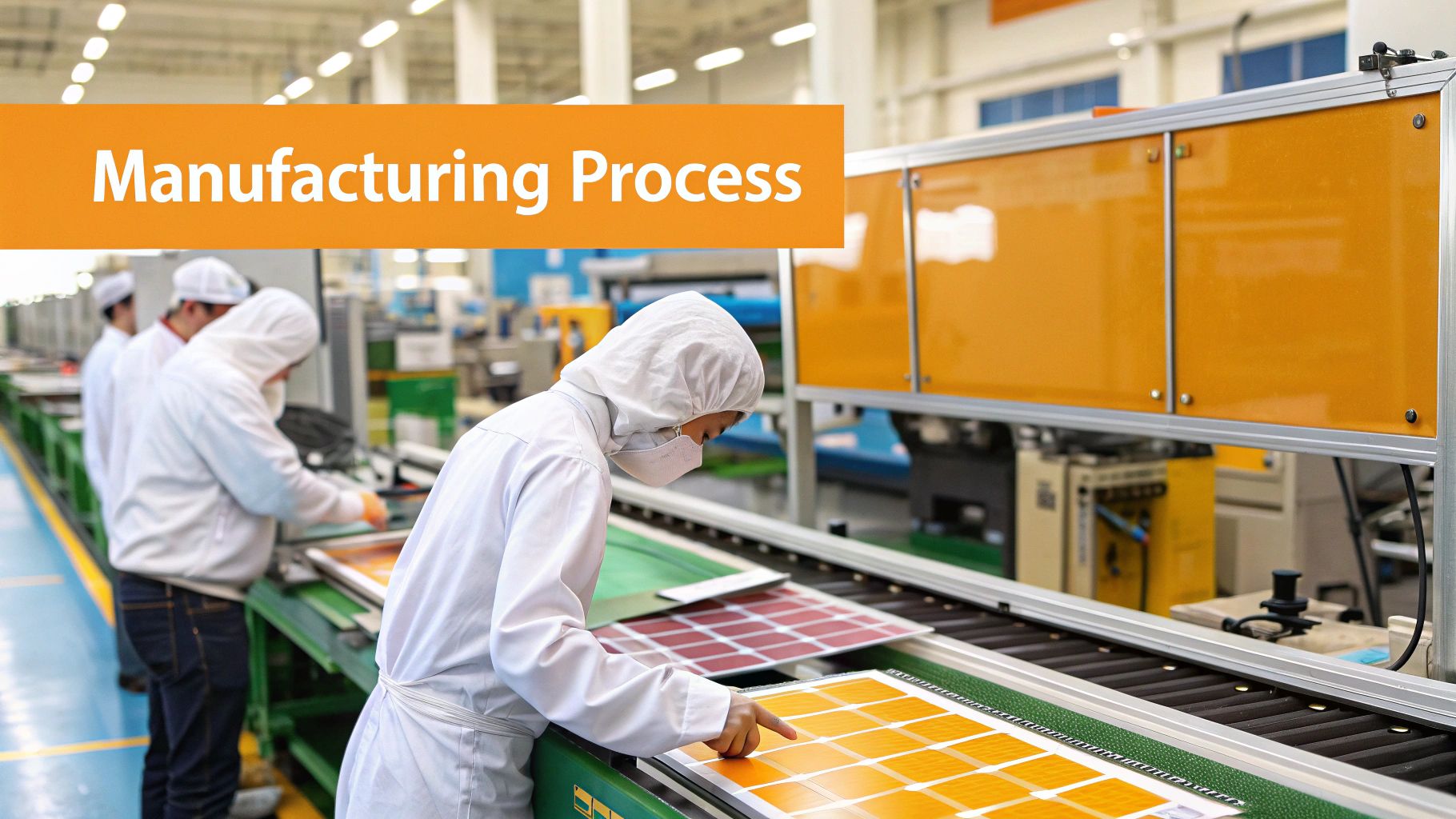
To truly grasp the difference between polycrystalline and monocrystalline solar panels, you need to understand their origins. The manufacturing process is where it all begins, defining everything from a panel's appearance on your roof to the amount of power it generates. This knowledge is key to confidently choosing the right panels for your New York property.
At the heart of both panel types is silicon, one of the most abundant elements on Earth. However, the way this silicon is processed creates two distinctly different products. The divergence starts at the crystal level and has a ripple effect on every aspect of performance.
The Single-Crystal Precision of Monocrystalline Panels
Monocrystalline panels are created using a meticulous method known as the Czochralski process. The objective is to form a single, flawless silicon crystal. Technicians start with a small "seed" crystal, which is dipped into a vat of molten, high-purity silicon.
The seed is then slowly pulled upwards while rotating, allowing the molten silicon to attach and grow into a large, uniform crystal ingot. This is a slow, energy-intensive process, which contributes to the higher cost of monocrystalline panels. Because the entire ingot is a single, unbroken crystal, electrons can flow freely, which is the secret to their high efficiency.
Why This Matters for New Yorkers: The single-crystal structure allows monocrystalline cells to generate more power from a smaller area. If you're dealing with a limited roof on a Long Island home or a commercial building in Islip, this superior efficiency helps you maximize energy production without needing a massive array.
Once the cylindrical ingot is formed, it's sliced into paper-thin "wafers." To ensure they fit neatly into a rectangular panel frame, the round edges are trimmed off, giving mono cells their signature octagonal shape with clipped corners.
The Efficient, Multi-Crystal Method of Polycrystalline Panels
The manufacturing process for polycrystalline panels is faster and less expensive. Instead of painstakingly growing a single crystal, manufacturers melt multiple silicon fragments together in a square mold and allow it to cool.
As the molten silicon solidifies, it forms many individual crystals simultaneously rather than one uniform structure. This collection of crystals gives polycrystalline panels their classic speckled, blue-marbled appearance, where you can often see the distinct boundaries between the different crystals.
This jumble of crystal boundaries creates more resistance for electrons, making it harder for them to move. This is why polycrystalline panels are inherently less efficient. However, this simpler, less wasteful manufacturing process results in a more affordable panel for homeowners and businesses.
Manufacturing at a Glance
| Aspect | Monocrystalline Silicon | Polycrystalline Silicon |
|---|---|---|
| Silicon Purity | Very high, from a single source | High, from multiple fragments |
| Crystal Structure | One continuous, uniform crystal | Many individual, varied crystals |
| Process | Slow and energy-intensive (Czochralski) | Faster and less energy-intensive |
| Waste | More silicon is wasted when cutting round ingots | Less waste due to square molds |
| Resulting Look | Uniform black, octagonal cells | Marbled blue, perfectly square cells |
Understanding this background helps connect the dots between how a panel is made and how it will perform on your home. The sleek, uniform black look of a monocrystalline panel is a direct result of its pure, single-crystal structure built for maximum power. Likewise, the budget-friendly price of a polycrystalline system begins with its simpler, more efficient manufacturing process.
You can explore more solar topics and guides on our company blog. Ultimately, understanding the "why" behind the technology empowers you to select the right solution for your specific goals—whether that’s generating every possible watt from a small roof or adopting solar with the best possible upfront cost.
Comparing Efficiency and Performance in New York
For any New Yorker considering solar, performance is paramount. The goal is to maximize energy production, reduce utility bills, and achieve true energy independence. A panel's efficiency rating isn't just a technical specification; it translates directly into cost savings and a stronger return on investment.
Panel efficiency measures how much sunlight can be converted into usable electricity. A higher percentage means more power generated from the same amount of space. For a homeowner in Lake Ronkonkoma or a business in Islip with limited roof area, this can be a game-changer, making solar viable even on smaller properties.
How Each Panel Handles New York's Four Seasons
New York's weather is famously unpredictable. Your solar panels need to perform reliably, whether it’s a bright summer day on Long Island or a cloudy afternoon in upstate New York. It is in these varied conditions that the fundamental differences between monocrystalline and polycrystalline panels become clear.
Monocrystalline panels, made from a single, pure crystal, are inherently more effective at converting sunlight in low-light conditions. This provides a distinct advantage during New York's shorter winter days and overcast mornings. Their structure allows them to capture a wider spectrum of light, ensuring your system continues producing power even when the sun isn't at its peak.
The chart below offers a direct comparison of what you can expect in terms of efficiency and cost per watt.
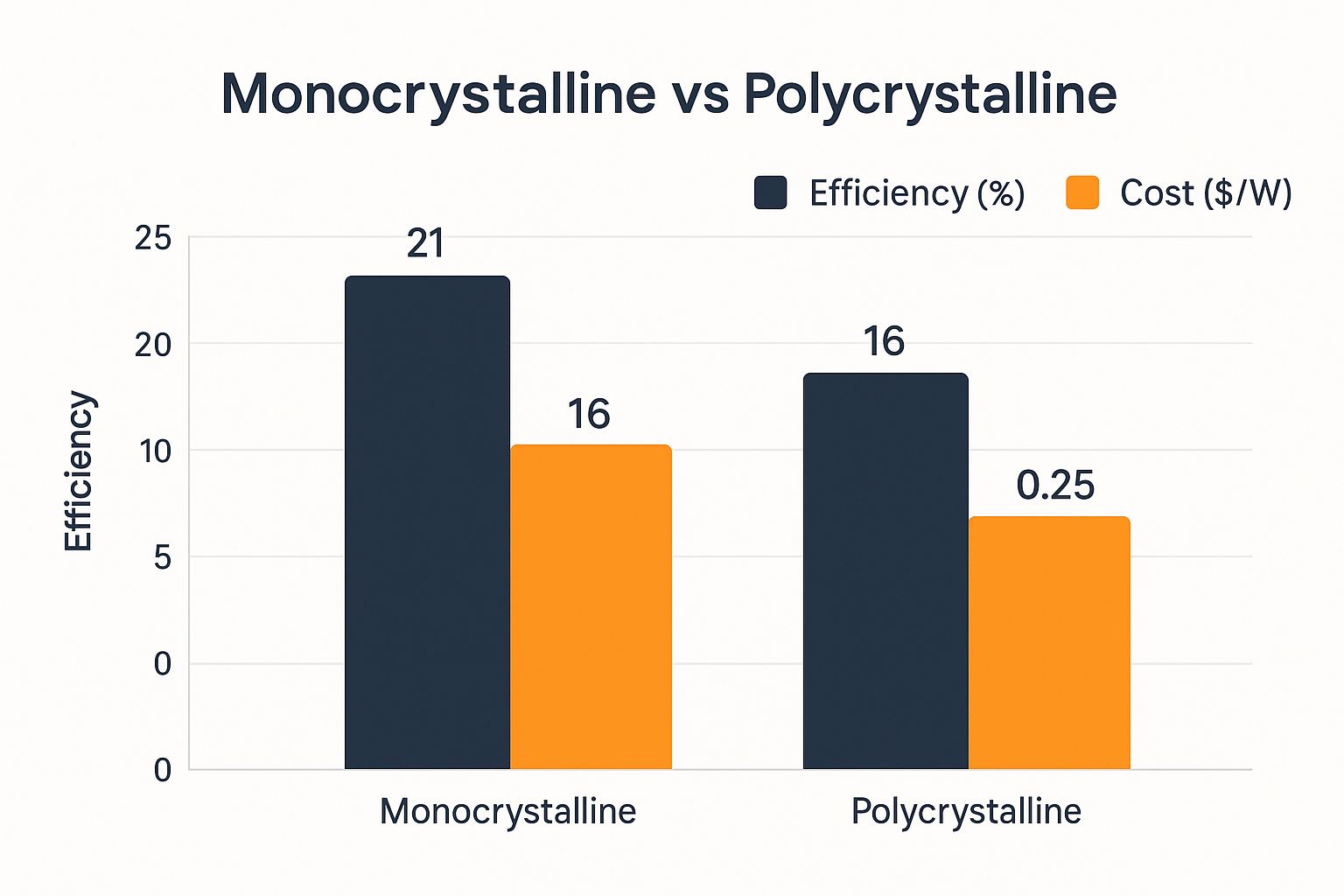
As you can see, while monocrystalline panels have a slightly higher upfront cost per watt, their superior efficiency delivers more power—a critical benefit when space is limited.
Temperature Coefficient and Summer Performance
Another vital specification is the temperature coefficient, which indicates how much a panel's output decreases as it gets hotter. While all solar panels produce slightly less power in extreme heat, monocrystalline panels typically have a better (lower) temperature coefficient, meaning they perform more effectively in high temperatures.
This is particularly important during New York's hot and humid summers. As temperatures climb, a monocrystalline system will maintain a higher level of performance than a similarly sized polycrystalline array. For a business in Islip looking to offset high air conditioning costs, this superior heat tolerance can lead to significant savings. To see what a modern installation can achieve, learn more about what a leading solar company in Islip can offer.
For New York property owners, this means more consistent energy production during the hottest parts of the day when electricity demand—and utility rates—are often at their highest. This reliability directly impacts your return on investment.
The higher efficiency of monocrystalline silicon, typically between 20–23%, surpasses polycrystalline's 15–17%. This difference translates to more power generated from every square foot of your roof, which is especially valuable in a high-cost state like ours. Although making monocrystalline panels is more complex, production costs have dropped significantly, narrowing the price gap and solidifying their position as a market leader.
Putting It All Together: A Practical Comparison
Let’s make this tangible. Imagine you own a home in Lake Ronkonkoma with 500 square feet of available roof space.
- With Monocrystalline Panels: At an average efficiency of 21%, you could install a system capable of generating a substantial amount of kilowatt-hours (kWh) annually, significantly reducing your electricity costs.
- With Polycrystalline Panels: Using the same 500 square feet, a system with 16% efficiency would produce considerably less power. To match the output of the monocrystalline system, you'd need more roof space—space you may not have.
This difference is also visible. The uniform, sleek black cells of monocrystalline panels are a clear indicator of their single-crystal structure. In contrast, polycrystalline panels have a fractured, marbled-blue appearance because they are made from multiple melted silicon fragments. This visual distinction is a direct result of the manufacturing process that dictates their performance.
For most New York properties, especially in densely populated suburbs and cities, the superior efficiency and all-weather performance of monocrystalline panels deliver the greatest long-term value and environmental benefit. They ensure you maximize the energy produced by your investment, helping you achieve energy independence faster.
Cost and Aesthetics: Finding the Right Fit
For most New York property owners, the choice between polycrystalline and monocrystalline silicon often comes down to two practical considerations: the upfront cost and how the panels will look on the roof. These factors shape your initial investment and your long-term satisfaction with your solar energy system. Let's break down the financial and visual trade-offs to help you make an informed decision.

The financial discussion typically starts with the initial investment. Polycrystalline panels have traditionally been the preferred option for budget-conscious installations. Their manufacturing process is simpler—they are made from melted silicon fragments rather than a single pure crystal—which keeps the price per panel lower.
This affordability makes them a practical choice for large-scale commercial projects, such as a sprawling warehouse in the Hudson Valley. When the primary goal is to cover a massive roof while minimizing capital expenses, polycrystalline panels are often the most cost-effective solution.
The Bigger Picture: Long-Term ROI
However, the initial price tag is only part of the story. The true value of a solar installation is measured by its return on investment (ROI) over its 25+ year lifespan. This is where the higher efficiency of monocrystalline panels begins to shine, especially given New York's high electricity rates.
Because monocrystalline panels generate more power per square foot, they produce more electricity over their lifetime. This increased energy production translates directly into greater savings on your utility bills and a stronger environmental impact.
For a homeowner on Long Island, this superior production can mean a faster payback period. The additional upfront cost is often recouped within a few years through more substantial monthly savings, leading to a more profitable long-term investment.
Ultimately, you are investing in your own personal power plant. Maximizing its output is the best way to achieve energy independence and protect yourself from unpredictable utility rate hikes. To see how this investment can transform your home's financial future, it's worth exploring residential solar options in Lake Ronkonkoma.
Matching Panel Style to Your Property's Look
Beyond the financial calculations, the appearance of your solar array is important. Solar panels are a long-term addition to your property, and their look can impact its curb appeal. On this front, the two technologies offer very different visual styles.
- Monocrystalline Panels: Known for their sleek, uniform black appearance. Because the cells are cut from a single crystal, they have a consistent and sophisticated look that blends seamlessly with modern architectural designs.
- Polycrystalline Panels: These have a more traditional blue, mosaic-like appearance. The multiple crystals in each cell reflect light differently, creating that classic speckled or marbled texture.
The distinct blue-speckled appearance of polycrystalline silicon solar cells comes from their manufacturing process, where raw silicon is melted and cooled to form multiple crystal grains. While their lower cost made them a popular choice for large installations, their market share has shifted as premium, higher-efficiency modules become more accessible. You can get more insight into the polycrystalline solar cell market on Precedence Research.
Which Look Is Right for Your New York Property?
The right aesthetic depends on your property's style and your personal preference. For a contemporary home in Westchester or a modern commercial building in Manhattan, the premium, all-black look of monocrystalline panels often complements the building's design perfectly.
On the other hand, if budget is the primary concern or the panels are not highly visible, the classic blue of polycrystalline panels may be a suitable choice. The key is to select a panel that not only meets your energy and financial goals but also enhances the look of your property for decades to come.
Making the Right Choice for Your New York Property
Understanding the technical specifications of polycrystalline and monocrystalline silicon is one thing, but applying that knowledge to your own New York property is what truly matters. There is no single "best" solar panel. The right choice is the one that perfectly aligns with your roof, budget, aesthetic preferences, and financial objectives.
Let's move beyond generic pros and cons and examine how this decision plays out in real-world scenarios across New York State.
Scenario 1: The Urban Homeowner in a NYC Borough
Imagine a townhouse in Brooklyn or a single-family home in Queens. With a small roof, every square foot is valuable. Maximizing power generation isn't just a goal; it's essential for making a significant impact on high ConEd bills and justifying the investment.
In this space-constrained situation, monocrystalline panels are the clear winner.
- Maximum Power Density: Their superior efficiency (often 20-23%) allows you to generate more electricity with fewer panels. When space is limited, this is the most critical factor.
- Faster ROI: While the upfront cost is higher, the additional energy they produce leads to a quicker payback period and greater long-term savings—a major advantage in a high-cost-of-living area.
- Curb Appeal: The sleek, all-black appearance of monocrystalline panels complements modern urban homes and can even enhance property value.
Opting for polycrystalline panels here to save money upfront would be counterproductive, as you would sacrifice too much energy production, undermining the primary purpose of going solar on a compact city roof.
Scenario 2: The Commercial Property in the Capital Region
Now, let's consider a large warehouse or commercial building near Albany with a vast, flat roof. The business owner's primary goal is to achieve the best possible return on investment by keeping the initial capital outlay low.
For a project of this scale, polycrystalline panels present a strong financial case.
- Lower Upfront Cost: The more affordable price tag allows the business to install a larger system for the same initial investment, maximizing total wattage without exceeding the budget.
- Space Isn't an Issue: The lower efficiency of polycrystalline panels is not a concern when there is ample roof space. More panels can simply be added to meet energy targets.
- Proven Reliability: These panels are built to last, offering decades of reliable performance and predictable energy savings that businesses can depend on.
For large-scale installations where the bottom line is the top priority, the initial cost savings from a polycrystalline system often result in the smartest financial outcome.
Scenario 3: The Suburban Homeowner on Long Island
Finally, let's look at a family home in a Long Island suburb like Lake Ronkonkoma. They have a decent amount of south-facing roof space—not unlimited, but not cramped. Their goal is a balance: they want significant long-term savings and energy freedom, but they also care about their home's appearance.
In this scenario, the decision often leans toward monocrystalline panels, even with ample space.
While a polycrystalline system could meet their energy needs, many homeowners in this position choose monocrystalline. Why? They prefer the premium, modern look and want to secure the highest possible energy production for the next 25+ years.
This choice is less about initial cost and more about maximizing long-term value and aesthetics. For many homeowners, especially those exploring comprehensive solutions like the residential solar options in Lake Ronkonkoma, the peace of mind that comes with top-tier efficiency and a sharp design is worth the additional investment. It ensures their solar array not only performs optimally but also enhances the beauty of their home.
Begin Your Journey to Energy Independence
Choosing between polycrystalline and monocrystalline panels ultimately depends on your specific needs and priorities. If you're looking to maximize power on a small Brooklyn roof, high-efficiency monocrystalline panels are the ideal choice. If you're covering a large commercial roof upstate and need to minimize initial costs, polycrystalline panels may be the better option.
For many New York homeowners, particularly on Long Island where aesthetics are important, the sleek look of monocrystalline panels makes them an easy decision. Whichever path you choose, you are investing in decades of cost savings, environmental benefits, and energy security.
The best part? Going solar in New York has never been more accessible. Thanks to powerful state incentives like the NY-Sun Megawatt Block Program and various local property tax abatements, the financial barriers are lower than ever. These programs are designed to help property owners like you make the switch to clean energy.
Take the Next Step with NY Essential Power
When you explore the potential causes of high electricity bills, it becomes clear how much control a solar investment provides. You're not just installing panels; you're taking back power from the utility company and protecting yourself from unpredictable rate hikes.
Your path to energy freedom starts with a simple conversation. We provide the expertise and data you need to make a confident, informed decision without any pressure or guesswork.
The only way to know for sure which panel makes the most sense is to have a professional assess your property. We invite you to connect with the team here at NY Essential Power for a free, no-obligation solar consultation.
Our experts will analyze your property's potential, provide a direct comparison of your panel options, and give you a detailed quote that clearly outlines your projected savings and long-term return on investment.
There's no reason to wait. Contact NY Essential Power today to schedule your assessment and start your journey toward a brighter, more affordable energy future.
Frequently Asked Questions
When it comes to choosing between polycrystalline and monocrystalline silicon, most New York property owners have a few final questions. Getting clear, trustworthy answers is the best way to feel confident about your investment. Here are some of the most common questions we hear.
Which Panel Type Lasts Longer?
Both monocrystalline and polycrystalline panels are incredibly durable, designed to withstand everything from a Buffalo blizzard to a humid Long Island summer.
Nearly every reputable solar panel, regardless of type, comes with a 25-year performance warranty. While the single-crystal structure of monocrystalline panels may give them a slight edge in terms of slower degradation over time, the real-world difference in lifespan is negligible. You can depend on either technology to be a reliable energy source for decades.
Are Monocrystalline Panels Always the Better Choice?
Not necessarily. The "better" choice depends entirely on your specific circumstances. Monocrystalline's main advantage is its efficiency—generating more power from less space. If you have a small roof on a townhouse in Brooklyn, that efficiency is crucial, making monocrystalline the ideal choice.
However, if you own a commercial building in the Hudson Valley with a vast, open roof and your primary goal is to minimize upfront costs, polycrystalline panels can often provide a better return on investment. The best choice is the one that fits your property, budget, and energy goals.
The most important factor is a proper system design. A well-designed polycrystalline system on a large roof can outperform a poorly planned monocrystalline array every time.
How Do New York's Cloudy Days Affect Panel Choice?
This is a common concern for New Yorkers. From Rochester to Montauk, cloudy days are a reality. Monocrystalline panels do perform slightly better in low-light and overcast conditions because their higher efficiency helps them capture a wider spectrum of light. This can result in slightly more energy production on gray winter afternoons.
That said, modern polycrystalline panels have also become very effective at capturing diffuse light. The key takeaway is that all solar panels are designed to produce power even when the sun isn't shining brightly.
The only way to know for sure is to run the numbers. At NY Essential Power, we use advanced software to model the real-world annual output for both panel types based on your exact location and historical weather data. This provides a clear, honest projection of what to expect, with no guesswork involved.
Ready to see how NY Essential Power can help you achieve energy independence? Contact us today for a free, no-obligation solar assessment and a detailed quote tailored to your property.